Hugo Bausch Belbachir: We could begin with your encounter with Sigmar Polke, in 1970. You were sixteen.
Michael Krebber: Was I really 16? Maybe 17.
H.B.B: It’s quite an advanced age, in any case, to be meeting Polke.
M.K: Yes, but what happened in Cologne in the second half of the sixties was more than just a lot—everything felt within reach, you just had to go for it. I had seen a Polke exhibition organized by René Block in a booth at one of the early art fairs, and I thought it was silly. Nothing else seemed silly—only this. But soon after, I met Michael Buthe, who had a large Polke drawing in his hallway and spoke highly of him. Not long after, there were two parallel Polke exhibitions, right next to each other, in the two tiny galleries of Thomas Borgmann and Michael Werner. Werner showed the two Tiber Tücher, and Borgmann exhibited a large number of drawings—an entire drawing exhibition, plus many framed works stacked in two or three piles of maybe 30 to 40 drawings each in the back room, leaning against the wall. I went there almost every day. The prices were very low, the stacks shrank daily, and the prices rose gradually. I met Polke for the first time at Michael Buthe’s apartment. I asked if I could visit him in Düsseldorf, and I did. That visit was absolutely beautiful and intense—I could write a novel about it. On my second visit, Polke told me they’d be coming to Cologne that weekend. There would be a party. They’d been asked how many people they were bringing, and hadn’t answered yet—but I should come. The host would be a psychologist, but he’d be fine. I had already met Benjamin Buchloh once at Rudolf Zwirner’s gallery, where he worked with Birgit Küng. Through them, I had heard of Jule Lüpertz and Michael Werner, had visited them, and had started seeing Jule Lüpertz regularly at her Art Deco shop after school. And when I arrived at Heubach’s Interfunktionen party—Heubach turned out to be the psychologist—everyone I knew was there. The people in these different rooms in Cologne had very different political stands and stances, and it happened regularly after openings or at parties that some sat together at one table.
H.B.B: Referencing other artists has remained a profoundly important aspect of your work. I’d like you to speak to me about Markus Lüpertz, under whom you studied in Karlsruhe between 1975 and 1977.
M.K: In the midst of all this, I was thinking about where to study, and how to find a teacher who could explain all of it to me. Since Polke wasn’t teaching in Hamburg at the time, I turned to Markus Lüpertz, who had just started teaching in Karlsruhe. I had met him, and he had been very direct right away, which I liked. A lot also came out of my friendship with Jule Lüpertz, a close friend of Michael Werner. One was always sitting somewhere, someone would drop by—sometimes Broodthaers and Maria Gilissen—or you’d visit Thomas Borgmann for coffee and cake, and everywhere you’d encounter fascinating works of art and hear interesting things. Borgmann, for example, told me about Balthus and the relationship between Balthus and Pierre Matisse. I rarely spoke with Michael Werner, but when I did, those conversations were among the most important for me. They felt like the kind of teacher–student relationship I had been longing for—and I also tried to impress him. At the time, none of this was explicitly framed as “anti-modernism,” but the discussions on that side always seemed to circle around something like it. Switching to Markus Lüpertz’s class marked a dramatic shift—the program was Return to Order. But I hadn’t come from anywhere yet. During that period, Polke was moving around a lot—first from Düsseldorf to Cologne, and eventually to the farmhouse in Willich.
H.B.B: Which you are also doing—moving.
M.K: I visited Willich a few times, but I couldn’t quite grasp what was going on there. They were also doing mushrooms.
H.B.B: You as well?
M.K: No.
H.B.B: Too afraid?
M.K: No. I just didn’t happen—when I was there.
H.B.B: I am interested in how you talk about being in different rooms, insofar as your work is very much about the experience of being among these different groups, different people—and how that impacts your body. So, I would like to know more—and I’m asking this with the awareness that the work you made at the time wasn’t erased, but perhaps wasn’t fully considered until later—about what you were working on back then.
M.K: At that time, I loved Polke’s Salon Pirates painting. It had been painted for, and was meant to be installed in the back room of Jule Lüpertz’s Art Deco shop—but it never got there. There was a sense that the work I was making myself at the time wasn’t erased, but maybe not fully acknowledged—not yet. It wasn’t “work” at that point. Later on, yes, I could say: I did that. Maybe I came to fully consider my own work at some point, but not as a success. Maybe like this: I hadn’t yet managed to give back the exact amount of pleasure I had received from Salon Pirates and Polke’s earlier works, for example. But I was exhibiting—and trying to survive my exhibitions. Recognizing the different kinds of failures—or the differences in the quality of what didn’t succeed. And that, too, led to theatrical qualities. I never gave up on what I had been looking for in the first place.
H.B.B: It’s interesting, as your work is often characterized by an ideology of refusal. Especially at that time; many people wrote that you refused to show what you were doing. But in reality, in a way, you were simply waiting for it to happen. And it didn’t. Not quite yet.
M.K: That’s what happens when you’re trying to find something. I couldn’t achieve anything in Markus Lüpertz’s class either. I would go browse the kitsch department at the Woolworth store in that town, and while I looked at those objects, the pain in my stomach would dissolve. I went there nearly every day, trying to stay in kitsch the whole time—but I couldn’t manage it. I also didn’t know about camp. Even though camp had already been around—on WDR’s third TV program, in the Cologne film club, in Polke telling me about watching Pink Flamingos in New York, and so on—I hadn’t had a name for it yet.
H.B.B: When, then?
M.K: Only in 1999. In 1977, I had slept on a bed next to a sewing machine—at the time, costumes for Jack Smith were being sewn on it. But I didn’t know who Jack Smith was then. Later, I missed the chance to see him when he was in Cologne. It had also been a friend from those early days, Ernst Mitzka, who once invited him to Hamburg for I Danced with a Penguin. I only really discovered Jack Smith when I read the transcripts from a conference in Graz titled Cross Gender, Cross Genre, organized by Juliane Rebentisch, Diedrich Diederichsen, and Mike Kelley. That’s when I saw the first Jack Smith films. Jay Sanders gave me more information and sent me the Mitchell Algus catalogue he had designed, along with articles about the legal battles over Smith’s estate—a piece by J. Hoberman, among others. That’s when I really got into it.
H.B.B: And then it stays.
M.K: Yes
H.B.B: Can you talk about the end of your studies?
M.K: My studies was pretty short—I only did 5 or 6 semesters and ran away. It did not have a real end. I went to Cologne’s employment office and became a gatekeeper of a large hospital complex while reading Marquis de Sade’s Juliette. Juliette, or Vice Amply Rewarded is the full title. And besides, finally, I achieved a result; a painting. I somehow managed to get the telephone number of the Derneburg castle and called Baselitz to ask if he would take me in.
H.B.B: And this is when you started working for him—in his castle.
M.K: Lüpertz really helped the way. Baselitz took me in his car, driving to Derneburg the following day to introduce me to his wife, Elke. That evening, I was shown a lot of things—it was intense, and at dinner I drank a lot and loved the food and took the chance to show off as best I could. The next morning, Baselitz said I could come. I also had told Baselitz that I had just made a painting, and with this painting, my first one, I could now walk through miles of swamp. I had taken that sentence from a Kirkeby text.
H.B.B: Can you describe the painting?
MK: It was painted on a wooden board. I had a candle next to my bed because the apartment had no electricity. I used the candle as a model—a candle on a plate. I had some oil paint and applied it, but it immediately turned into mud across the surface. I scraped everything off, and only two lines remained, marking the outline of the candle. With just those two lines left, I started thinking of Immendorff’s “political” paintings, which often feature stretched, exaggerated perspectives. I began constructing a perspective for the round top of the candle, aiming to achieve a similarly stretched effect. I ran the outline line from the back, into the circle, and toward my face—until it reached my nose—and then let it ride the rest of the circle back to the starting point. Like a ride on a merry-go-round. It worked—by following the line again and again, adjusting the speed, looking with one eye, squinting, trying to stretch it more and more. The result looked modest, but it functioned. And because there was nothing else in the painting, I decided to depict a bit of the ground the candle stood on. I applied some color to the lower left and lower right corners of the board. And because the perspective at the top was already functioning, this bit of color—despite having no perspective itself—was pulled into the existing spatial effect. You’ll know that phenomenon. Kiefer’s paintings, for example, use precisely that—and little else. The last time I came to my apartment before moving to Derneburg, I left the wet painting out with the garbage.
H.B.B: When you say that you have put it to the garbage—knowing, consciously, that you had made it; that your body had produced it—was it in a way of saying that you could finally do it, and, therefore, do it again?
M.K: It felt strong to travel with the formula and no object. But during my year in Derneburg, I finished only one painting—and it wasn’t as good as I had hoped. It didn’t give me the same experience I had had with the first one. Still, I called it a real painting. After that, I couldn’t finish anything anymore. I was perceiving Baselitz’s paintings—and that was it. At some point, I had to move away. I unstretched the painting and folded it—to make clear that this was garbage. Garbage worth being kept.
H.B.B: Not too long after, Kippenberger enters the picture.
M.K: And something had happened while I was still in Derneburg. I visited Hamburg and reconnected with some old friends. One of them introduced me to the waiter who brought our drinks—it was Albert Oehlen. And that’s actually how things started to come together. But I still had to finish my time in Derneburg. From there, I moved to Berlin. I liked Albert Oehlen very much. He had come out of Immendorff’s Maoist organization, where he had once been in charge of stamping letters to be sent to the comrades. Albert was painting the works you now know as his early ones. They looked a bit like Schwitters’ portraits and landscapes—those other works Schwitters probably traded for bread or food. And when it came to his relationship with Immendorff, Albert seemed to come from the same tribe as I did. He seemed to understand everything I said and everything I thought. I had never met anyone like him before. What’s more, he was right at the center of everything that had to do with German Punk—the more interesting side of it. He taught me a lot—about music and just everything that was going on at that moment. He wrote for Sounds, the music magazine, and his friends, and the whole scene in Hamburg—absolutely impressive. And Polke was around. By then, he had become a professor at the Hamburg Academy. If there was any teaching happening, it was well hidden. Everything had an edge to it—aggressive, but in a good way. I first heard about Kippenberger in Hamburg, without knowing who he was. Then I met him—first in Hamburg, and later in Berlin, at the Paris Bar. I got to know him a little, before he moved to Paris.
H.B.B: Maybe you could talk a little about working for Martin. I guess, with Lüpertz, there’s this idea that you have to go through him. Perhaps that was part of your process—working through someone you admire; trying to move beyond or through their influence.
M.K: Kippenberger and I were of the same generation, shaped by the same influences. The ’80s had just begun. But what the Hamburg artists were doing—while it didn’t match my ideals—was at least moving in that direction. That was also how I wanted to understand my relationship to Kippenberger. He regularly impressed me. In that relationship, I said or did stupid things—but he did too; he could handle a lot—and then turn it into something. Sometimes very funny, often very low. Slapstick. Earlier, Kippenberger and Oehlen had asked me to do a show in a space they were running in Hamburg; it would become my first exhibition. I agreed—without having anything, and without any idea of what to do. Albert had lured me in after I made an insulting remark about another Cologne painter in the room. He responded by saying that in such a case, they wouldn’t go to the police; they’d just stand next to the person and do the same thing—but differently. I made a painting again—similar to the one that had ended up in the trash, but this time a bit more complex. You can see it in my catalogue. When painting it, I had Antonius Höckelmann in mind. It also works a bit like a Guston painting. Painting it at all was once again extreme. I had imagined two jelly-like bodies floating in a liquid. I’d take a drumstick, strike each one once, and then observe the resulting movement. I managed it. And I felt strong again. And as a consequence, I expected Max Hetzler to invite me.
H.B.B: What about the other galleries in Cologne?
M.K: They were either not on the right side or not on my level, I thought. Besides, I wasn’t getting any offers anyway. I had to make a choice: either go back to day jobs or work for another artist.
H.B.B: Which was Kippenberger.
M.K: It came to be Kippenberger. Cologne was full of artists at that time. I took my situation as humiliating—to work as an assistant for an artist who was same age. I asked the two in Cologne I respected: the sculptor Hubert Kiecol, and Martin Kippenberger. I asked both of them for a job for a year, and I started to work for both of them.
H.B.B: The status of the assistant—what you will later refer to as the experience of the employee—will resurface at some point with Kippenberger, as a kind of reaction to Minimal Art, which was structured around the suggestion of a certain autonomy within the work, but was, in fact, the result of the labor of employees—assistants and manufacturers—whose contributions were completely disregarded.
M.K: Kippenberger must have known Marianne Stockebrand, who at the time was director of the Kölnischer Kunstverein in Cologne. Maybe his Judd ideas came from there. But things were more complicated here; Kippenberger kept the business running—his interests, the dirty work, indeed. The complete mix—both inside and outside this “dirty” work—sometimes got on people’s nerves or involved trying hard to entertain them, with often absolutely unexpected reactions and frequently spectacular failures. There was also fun. This one’s for Kippenberger: his blend of enjoyment and meanness was a lot like what you find in Jesse’s Beau Brummell. Kippenberger praised Kurt Raab’s book, written immediately after Fassbinder’s death, which detailed Fassbinder’s meanness and sadism in depth. I didn’t want to be called an assistant; I wanted to be called an employee. I had seen that title on a business card from Broodthaers. Kippenberger agreed—but then he told everyone that I refused to be called an assistant. He made things difficult for me. I had said, “I’ll work for you, but don’t want to do the social stuff.” He said Okay. Early the next afternoon, at a certain time, I was told to come to Café Broadway. This was the spot where everyone met morning and afternoon—opposite to Buchhandlung Walther König and Wolkenaer, the famous old paint and artist supply shop that no longer exists. This corner was quite the center of Cologne. I was asked to bring one complete set of Kippenberger’s posters, fetch the longest ladder from Wolkenaer, and staple the posters in a line on one wall of the café, starting from the top left. The café was tiny but very tall—six or seven meters high. Getting the ladder inside was already a performance. I saw Max Hetzler and others sitting there, waiting for the act. Maybe Luhring Augustine was there too—I don’t remember—but this describes the atmosphere. Kippenberger had invited them, and I was to perform for them. I had to climb over their knees, move the ladder sideways. I did my stunt, and once on the ladder, I said a curse. That was my first job for Kippenberger. The next challenge was driving to a Kippenberger opening in Holland with Hetzler, Gisela Capitain, and Georg Herold in the car. Suddenly, Hetzler asked, “But what about your own art, when you work for Martin?” I had to answer. I heard the clock ticking: 10, 9, 8… I kept asking myself, What will you say? 3, 2… I said, “My work is the work for Kippenberger.
H.B.B: Total masochist dedication.
M.K: Total surrender, for sure. And then the work in the studio began. I was asked to build pedestals—those related to Donald Judd. Kippenberger gave me a drawing with ten sketches and asked me to build them out of pressed wood panels—the German kind, very different from the American ones. When finished, I was to spray-paint one side of each piece. The first one failed, the second was okay, and the third was perfect. I showed them to Kippenberger and said the first one had to be destroyed, otherwise everyone would make jokes about me. Kippenberger said no—I should cut the piece into three parts with a circular saw, as if I had made smaller pieces for the trash. Then stack the pieces on top of each other, with the object—the broomstick cast in bronze—on top. I was impressed.
H.B.B: And there is the experience of the Marquis de Sade; the confrontation between reading about sadism and its presence immediately around you, in reality.
M.K: I hear you, and I’ve been called a masochist a few times. Put it this way: if you have no sense for this kind of thing, you shouldn’t go on stage. The feeling of being trapped was all the more real because I contributed to it. I liked the work. And the work continued through dinner and later at the bar. I always drank a lot and became increasingly enthusiastic, but each idea triggered the next one. The more fun it was, the more I had to work the next day, and the tasks also turned out to be complicated. One night, completely drunk, I was told that I still had to go to the studio that very night to build two works. They were supposed to be picked up the next day. I had forgotten. I staggered to the studio, did the work, and went to sleep. Early the next morning, I got a call from Kippenberger, who told me he was really sorry, but I should take a look—I’d have to redo them. I had ripped the fabric in all the corners. The task was as follows: Two pieces of fabric had to be stretched. The fabric was a gingham pattern, one light blue, the other pink. But each piece was sewn together from three similar but differently sized patterns, increasing or decreasing in three steps. For each piece of fabric, I had five differently sized stretcher frames. These were laid on the fabric on the floor—the small inner one, a larger one around it, and so on, all five. Then the fabric was cut into three pieces, so you had a small piece in the center and two pieces like frames around it—a smaller and a larger one. The two frame-like outer parts were each to be stretched onto two stretcher frames, one outer and one inner. This was difficult, and I forgot exactly how I did it. In the end, you could hang these three parts inside each other on a wall and see them as one piece. The pattern visually made it appear as one. The result was rather uneven because it’s impossible to stretch this precisely. But the big mistake was that I hadn’t accounted for the extra inch or centimeters of fabric needed for stretching—the extra fabric folded around the stretcher bar. My pieces were a bit too small. The rips had to be repaired by backing the gingham fabric with unbleached cotton. I re-stretched it, and in the inner corners, you could see the underlying fabric. It didn’t look nice. One day, I was invited to dinner, and something felt very different—maybe it was the timing of the phone call. I went over and was asked if I could build an edition of three of one work that had been one of the most complicated, with extreme damage in the studio, and an absolutely surprising and rewarding result. I said no—that I couldn’t do that again. Also, real suffering that leads to a surprising result; how could that happen again in a work I already knew, especially as an edition of three? That was somewhat the end of the work, but there was still a lot to build and finish, and others came in and helped.
H.B.B: And, in 1986, there is the first exhibition of yours — solo, organized by Martin.
M.K: Yes, and I had nothing to show, so I asked Kippenberger to give me back one idea—the sewn-together children’s pants. He hadn’t had them made for the Peter exhibition because the original plan was to hang them on a wall, and he only wanted sculptures in his show. There was more in the exhibition, but for our conversation, this is probably enough.
H.B.B: In 1990, you exhibited a painting you had created in 1978. It was only then, twelve years later, that you decided to allow it to be seen—to allow the painting to be acknowledged. I deeply admire this attitude: the longevity of your reflection, and the uninterrupted continuity of your work. A form of consciousness, perhaps—of one’s own values, of one’s own awareness.
M.K: This wasn’t as planned as it might seem. It was actually a bit more complex—and a different time. Through Kippenberger, I met the two gallerists Christian Nagel and Matthias Buck, who ran Galerie Christoph Dürr. They were the ones who produced the edition of the broomstick cast in bronze, with one of those often Judd-like sculptures added to each piece. I first met Matthias Buck when he came to Kippenberger’s studio to take a look. That night, I took him to a bar, and we talked a lot—also about Munich. For example, Blinky Palermo in Munich. Nagel and Buck knew Achim Kubinski, who worked with Kosuth, and they also knew Förg. That’s probably how they connected with Kippenberger. They put on some really good shows. I remember seeing a Georg Herold exhibition there that became one of my favorites for a long time. Then, unexpectedly, they invited the two assistants to do a show: Fareed Armaly, who was Kosuth’s assistant, and me, Kippenberger’s assistant. They embraced everything—and that’s how Colin de Land came to Germany. At that point, Fareed Armaly was an important figure. He had this ability to bring things together in a way that made sense to me. He talked about a kind of art that had just started to emerge in New York. I think he was the first to explain the work of Andrea Fraser, Peter Fend, and Mark Dion to me—without even mentioning their names at first. Soon after, they all came over—with Colin de Land. To me, he was a gallerist who played at being one. He set up a booth at the Cologne Art Fair, just like Jacques Tati had done in Playtime. In the film, it’s an automobile fair, and Tati’s car only arrives when the fair is already over. The AFA booth installation may have only been finished once the Art Fair closed. And Colin de Land wore clean trousers and shoes sprinkled with paint. No one should try something like that—he was too big. This later got labeled as Context Art, at least for a while.
H.B.B: And you were very much a part of that—context art.
M.K: I tried hard, but I want to stick with the original names—Fraser, Fend, Dion, AFA (American Fine Arts, Co.), and Colin de Land. And also Renée Green, who showed with Pat Hearn. Then came Christian Philipp Müller, also through Armaly. All of this kept me in check—which it did for many others too.
H.B.B: Do you mean you were trying to position yourself as part of what was called or came close to context art? Were you trying to be recognized within that circle?
M.K: There was an incident at the very beginning of this time—I think before Colin de Land or any of the artists he showed had ever visited. For my planned exhibition at Galerie Dürr, I had asked for 50 frames to be ordered. I intended to use them to display drawings I hadn’t made yet. At some point, I realized I wouldn’t be making them—or rather, I couldn’t make them. But the frames had already been delivered. In the end, I decided the exhibition would be an empty gallery. That was the show. But I filled three of the frames with ephemera and hung them on the wall in a small room next to the main space—as a kind of commentary. All of this came as a surprise to me, and it was exhausting. At some point I overheard someone saying that Fareed Armaly might be jealous of it, which made me proud. The conversations with Armaly continued. I had studied the blank spaces in Buren’s striped wallpaper, where he leaves out an installation that had previously existed on that wall. I thought about placeholders—an x in a mathematical formula, a fig. in Marcel Broodthaers’ work, or a △ in Joseph Conrad’s The Secret Agent. Armaly talked about placeholders all the time. At the time, I was subletting from my friend Uwe Gabriel, who had been a photo retoucher before digital editing existed. Retouching was done by hand, or by exposure using light—transparent red plastic sheets as masks, blocking light from the photo paper in the darkroom. Uwe Gabriel created photos that showed an exhibition of black rectangles hanging on the walls of what looked like a gallery space. But those rectangles didn’t exist—they were simply shapes cut out of red masks, and the ‘exhibition’ was produced by light. Fareed gave me the idea. I had told him about my struggle to produce and show works that didn’t exist. He said, But you live with a retoucher—ask Uwe. These photos were exactly what I wanted. But I should have shown them in a presentation, in a lecture—because the problem stayed with me. I didn’t want to show them framed. Framing would turn them into objects again. Then Uwe Gabriel said, When you do a formulation of a formulation, you’ll get into trouble speaking with a mathematician—they’re used to things like that. I tried to follow up for some time. The results are documented. But it was more of a struggle than a sharpening. At some point, I considered turning back to my drawers, returning to other unresolved issues. I had just done an exhibition with Nagel in Cologne, where nothing had been for sale. One consequence was that Cosima von Bonin and I couldn’t pay our rent. At the time, Nagel was financing each month with the proceeds from the previous one. In that situation, Cosima and Kippenberger came up with an idea—to get the folded canvas out of the basement, the one I had taken off the stretcher when I left Derneburg. Cosima knew it. I should restretch it and show it. They also proposed a price—a very high one. Kippenberger would act as the buyer, and with that, Nagel, Cosima, and I could all pay our rent.
H.B.B: There is a moment in your life as an artist when you became very interested in absorbing the style, form, and content—of Polke and Baselitz, for example.
M.K: Absorbing style, form, and content; that is a lot to answer.
H.B.B: How would you call it? It feels like a kind of process that goes back to Lüpertz’s idea of “going through him”—of being fully absorbed.
M.K: More a sort of doubling. It was maybe never my intention to copy anyone. I have to be careful; maybe it also was. But this here could maybe answer the question: I liked Renée Green’s early work most for her use of elements in the style of Broodthaers—and she was all but an epigone. I was interested in something like that.
H.B.B: So it was about the work, not the artist? We are now leaving the body and moving towards the work, exclusively.
H.B.B: So it was about the work, not the artist? We are now leaving the body and moving towards the work, exclusively.
M.K: I can’t answer. But there’s my one painting—the upside-down motif—
H.B.B: The one in the manner of Baselitz?
M.K: Yes. Driving to Derneburg, Baselitz told me how, at some point, he had decided to turn things upside down. That it was a technique, not a style. He said he had encouraged others to do it too. And I said, Okay, I’ll do it.
H.B.B: Michaela Eichwald has described you as an eternal student. I find it interesting because study is a system of repetition: learning, rehearsing, mastering. The pursuit of a technic, and a sensation of accomplishment. There is something eternal in that. Inevitably, it brings one into a relationship with one’s own staging—and this is precisely what your work reveals: a kind of performance of learning. One might say: to endlessly redo the gesture in order to become. Something towards maturity.
M.K: Being an eternal student—that’s not so bad. I recognize the things you say. And everyone knows concepts. But at some point, one has to play. There can be intuition, as well as just Zugzwang. Then Zugzwang becomes intuition. Finally, here is the body. I’m drawn to the idea of a functioning machine—an actively functioning machine. A representation of that. All that hits my eye, in reverse motion. Not taken in, but produced. One can work with that idea. I can’t do it anymore. I can. I can’t do it yet. These things interest me.
H.B.B: Can you tell me about that: the cessation of the functioning machine?
M.K: I’ve pulled the brakes, thrown off a lot of ballast, and made some statements. I’ve stopped the machine, at least the one on a certain track. ✦
Michael Krebber (born 1954 in Cologne) lives and works in New York and Cologne. Angeldust is his ninth solo exhibition with Galerie Buchholz since 1997, alongside numerous special projects and group exhibitions. Michael Krebber has had institutional solo shows at Kunsthalle Bern (2017), Museu de Arte Contemporânea de Serralves, Porto (2016), Musée d’Art Contemporain, Bordeaux (2012), Kölnischer Kunstverein, Cologne (2008), Secession, Vienna (2005), Städtische Galerie Wolfsburg (2000), Kunstverein Braunschweig (2000), and Villa Arson, Nice (1997), among others. Recent institutional group exhibitions include Les yeux dans les yeux, Pinault Collection, Rennes (2025); Graffiti, Museion, Bolzano (2025); Stop painting, curated by Peter Fischli, Prada Foundation, Venice (2021); No Dandy, No Fun, Kunsthalle Bern (2020); Abstraction: Aspects of Contemporary Art, National Museum of Art Osaka (2019); Spot On, Museum Brandhorst, Munich (2019); Optik Schröder II, Museum Moderner Kunst Stiftung Ludwig Wien (2018); Cómics: una nueva lectura, Museo Nacional Centro de Arte Reina Sofía, Madrid (2018); Jump Into the Future – Art from the 90’s and 2000’s, Stedelijk Museum, Amsterdam (2017); Painting 2.0. Malerei im Informationszeitalter, Museum Brandhorst, Munich (2015); Abandon the Parents, Statens Museum for Kunst, Copenhagen (2014), among many others. From 2002 through 2016 Michael Krebber was professor at the Städelschule in Frankfurt am Main. In 2015, Michael Krebber was awarded the Wolfgang-Hahn-Prize (together with R.H. Quaytman) by the Museum Ludwig, Cologne. Michael Krebber: Catalogue Raisonné Volume 1 was published in 2022 by Galerie Buchholz, Greene Naftali, and the Verlag der Buchhandlung Walther und Franz König. In November of 2024, Michael Krebber presented a talk on Andy Warhol as part of the Artists on Artists lecture series hosted by Dia in New York City.
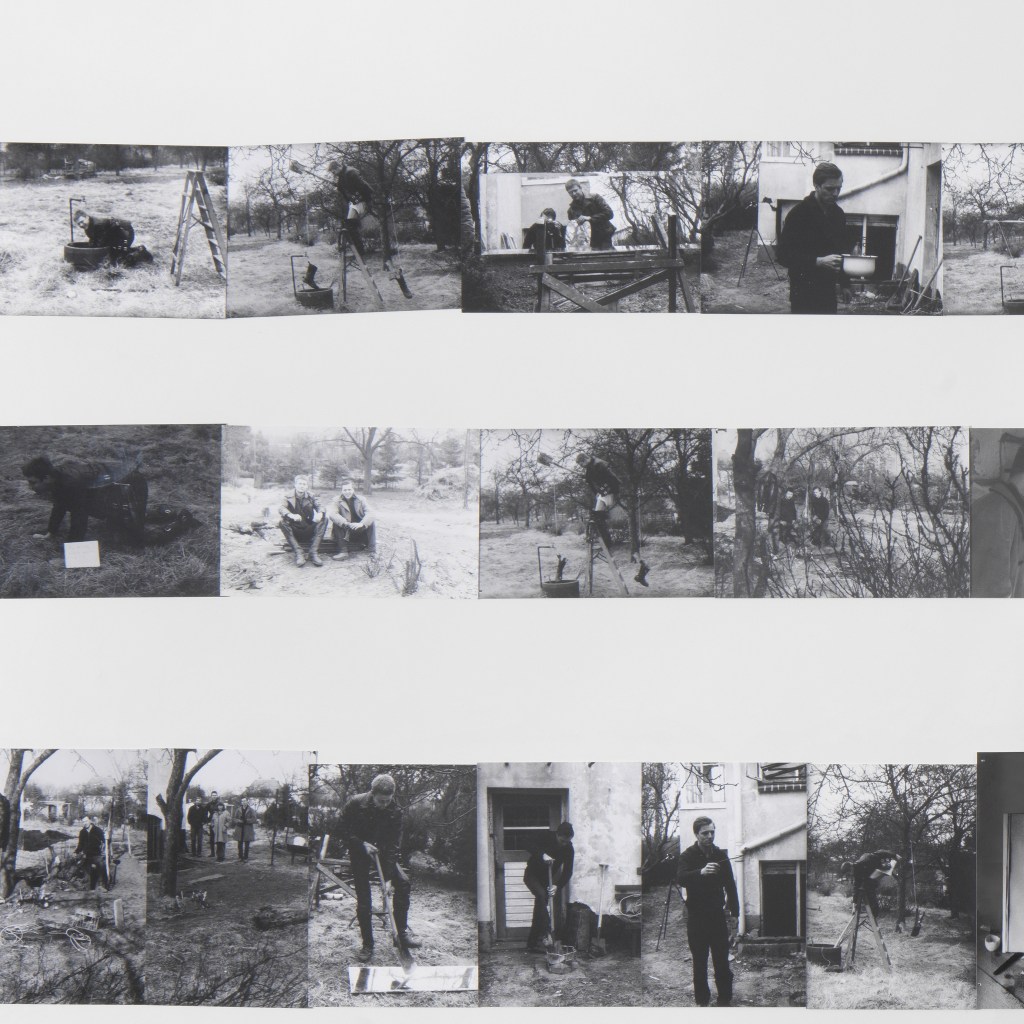
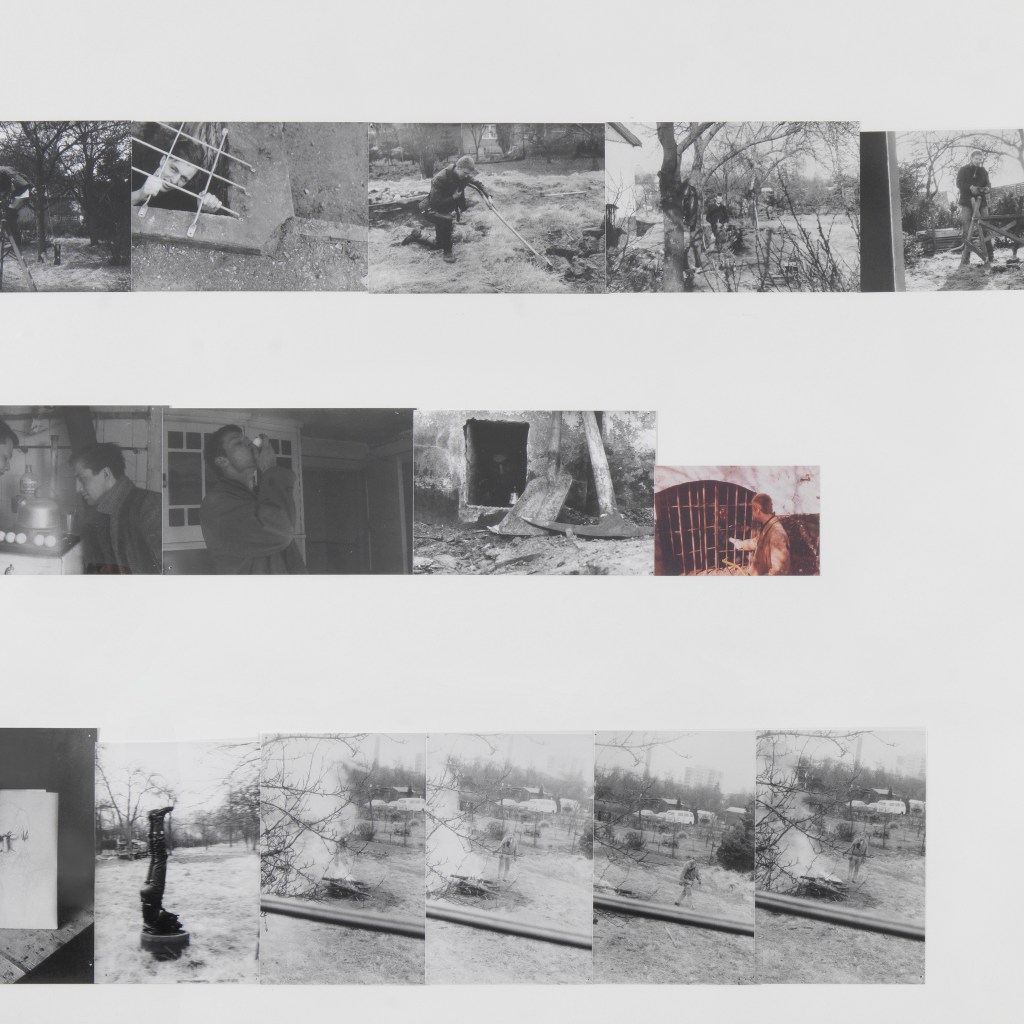
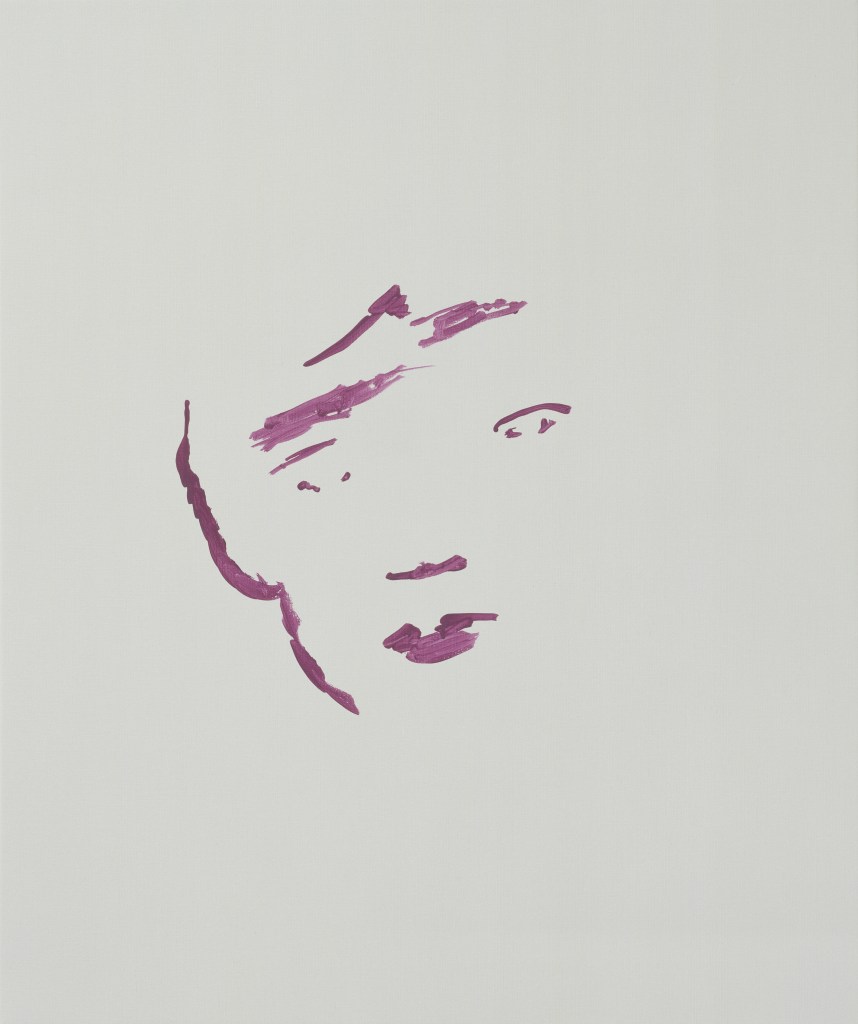
Images, in chronological order: Michael Krebber and Albert Oehlen, Untitled (1980) ; Michael Krebber, Or? (2001). Courtesy of the artist, Galerie Buchholz, Berlin, Cologne, New York; Greene Naftali Gallery, New York; Galerie Chantal Crousel, Paris; Maureen Paley, London.