I Should Have Known Better Than To Want: On Mark Morrisroe
A Conversation with Ramsey McPhilipps
Portland, 2024
Hugo Bausch Belbachir: I’ve been working on Mark Morrisroe’s life for the past six months, now. It’s a rather strange experience; to work with ghosts. Or at least on someone you never met. Naturally, at some point, it felt evident to get in touch with you.
Ramsey McPhillips: Did you get in touch with other friends?
H.B.B: I did. By confronting this reality—breaking free from the illusions spun by mystified narratives—I’ve encountered anger, fractured friendships, and more. Ultimately, escaping the allure of an ideal proves to be quite challenging. It was less romantic.
R.M: They were all so competitive. Mark’s group was just so mean to each other and competitive, calculating and jealous. It was amazing. But they were best friends, slept together, and did drugs together. It just was a completely different framework of association. It was really fascinating for me to see.
H.B.B: Do you remember the day you met Mark?
R.M: A friend asked me to fill in at the last minute to be a bartender at Pat Hearn’s apartment, where they were throwing a party. I didn’t know these people; I was just the fill-in bartender. I saw Mark’s head come off on the top step. He hadn’t walked up; he crawled up. Gail Thacker and Lynelle White were there too. The Star Twins as well. He had this beautiful, filthy suit on. He started at me and came dragging his leg across the table and started screaming, You’re fucking gorgeous, You’re going to be my next supermodel. I’m going to have your clothes off and photographed in no time. He was high on heroin. Everyone was nuts. I remember David Wojnarowicz being there, too. Mark’s fixation on me became a joke as I couldn’t leave, and they started auctioning off my clothes, fighting over my tie, and the whole thing was… I mean. I remember people sitting there and laughing. When the thing was over I turned around and there was this picture by Mark of Pat’s chihuahua, Chichi, exhibiting her fangs. They were trying to take my clothes off, and I went to the bedroom to get my coat and saw it moving; there was Chichi under it. I didn’t get paid and went home. I came by a few days later to get the cash. They asked me to come by the gallery. I received a call and it was Mark. They had given him my number. I didn’t pick up the call. I have these recorded. I have it on my answering machine. Same crazy blah, blah, blah. You’re going to fuck me, and I’m going to take a picture, and you’re going to be my new supermodel, and you have to do it, over and over. I never picked up the phone—until I did. He said something like Look, I’m really famous. I know you’re an artist. You need to go to the Pat Hearn gallery and look at my work. If you like my work, then you can call me. If you don’t like it, then I’ll leave you alone. I thought that was fair. When I walked to the gallery Pat appeared like a sort of Jackie Onassis or Morticia Addams, she just looked striking. She proceeded to take me into a room and giggled; Mark was there, with his work splayed out on the table. She closed the door behind me. Mark was in a suit, clean, behind the desk, and methodically went through his work. It was magnificent. I knew right there he was a genius. Then he said something like Now it’s the tradition that the patron takes the artist to lunch. I had no money, and couldn’t even afford a hamburger, so he took me to lunch.
H.B.B: New York, 1987?
R.M: Absolutely. Union Square. He proceeded to tell me his life story about his father, his upbringing, his money issues, and how he had paid through art supplies with prostitution, and his artwork, and what it meant, and that he was going to become extremely famous, and he had it all plotted out. He wanted to be a rock star and all this really magnificent stuff. And you have me, listing; a wasp from Oregon in a cowboy outfit. As a joke, he said, Well, for the cost of this meal, I think that I’m entitled to the rights to your life story, and wrote that on a napkin: I, Mark Morrisroe, give the rights to my life story to Ramsey McPhillips. I shoved it over to him. Then he said we had to sleep together. I didn’t want to. And he asked to see my work. So a couple of days later, he came over—and we slept together.
H.B.B: What a crime pusher.
R.M: He was manipulative, beautifully and terrifyingly. I was completely frightened of the whole thing just because it was the middle of the AIDS crisis, and he obviously had drug issues.
H.B.B: In the end, this encounter is a conflict; the confrontation of two antagonistic elements. It’s incredible to hear you talking about this story that seems so impossible, so difficult; that required, in the end, such work, such charm, such irrational love.
R.M: I just instantly fell in love with his genius. He started taking me to these art parties, getting me dressed up in a gay caballero outfit, doing things like making me wear two pairs of jeans to make my butt look bigger. And somehow, at these parties, he would be off on the corner. No one would pay attention because he would come drunk or on heroin. I was just like a trophy cowboy. Pat was intrigued and very kind to us. She supported him. Then early on in our sleeping together, I noticed some physical things about him that were not right. His mouth seemed sour, and his skin just seemed pale. I asked him to get tested. I went with him, and it came out positive. He went on a heroin binge. Everything was brilliant before everyone got sick. It was a horror story. Mark was really, really angry. He didn’t have money. No one knew what to do; we were completely lost. They had all rejected him because of his behavior, except me. I mean, it’s a long-winded story.
H.B.B: Did you ever want to leave him?
R.M: I did. I said Fuck you and left for this villa in Italy, working for the World Bank. I began to feel guilty. I feel really bad that I did that. I received this call from a friend, asking me to come back. Mark was sick. He was about to die. I came back and found him on the floor, at the hospital, wrapped in some phone cords and blood. They were letting him die on that floor.
H.B.B: While everyone moved to the East Village in the early 1980s, Mark decided to establish his studio in Jersey City, outside of Manhattan. Can you talk about this place?
R.M: Mark had inherited Philip Taaffe apartment, and it was on the fourth floor of a six-story tenement building. It was nice. I guess just before I left, before Mark was hospitalized that last time, the owner of the building wanted to sell it, and he had to get rid of all the tenants. He couldn’t get rid of Mark because he had HIV. There was a law that you couldn’t evict someone who was sick with HIV or terminally ill, something like that. The man gutted the entire building. There were probably four apartments on every floor; you could see through all sides of this entire building except for Mark’s apartment. And that’s where he was. Mark was in there on morphine and sick, throwing his shit around and masturbating and still making art all the time. He just never stopped. He’d go to the bathroom and he’d hear this clutter, and he’d be in the bathtub, washing some print, dragging his leg, covered in his own feces. It just was insane. Everyone who came to visit him was forced to help him do that. That’s what he wanted you to do. I need to make art. I need to make art. At that point, I was recording his life. I tried to find other people to do it, and they wouldn’t do it because he was so violent, and dirty, and scary, and angry.
H.B.B: You were recording his voice?
R.M: I tape-recorded everything.
H.B.B: Can you talk about his relationship with Pat Hearn?
R.M: Pat was a very savvy dealer, and she was pacing Mark. We all knew that Mark was the ticket; he is the person who really, over the long run, had he lived, should have been the most marketable because of his prolific nature, his beautiful photographs, and what he was capable of doing. She also worked with Taaffe, and other amazing artists, of course. Jack Pierson was working for her at that time—he hadn’t started his career yet. Pat, financially, completely supported Mark. That’s how Mark survived when he moved to New York. She paid the bills; she would sell just enough work to support him. Marc would sell work on the side, and she’d find out about it, and she’d go and find them. She was great. I remember interviewing Pat. It happened to be the day of her diagnosis, which made it even more important for her to tell everything. More imperative, let’s say; her history, her family, her work as an artist; everything.
H.B.B: Coming back to the tapes; why were you doing that?
R.M: I wanted someone to write about Mark’s story, and couldn’t find anyone. To gather documents. No one wanted to, and he was dying—so I did it. In his will, he left me three things: his ashes, the rights to his life story, and a particular photograph, which I was enamored with. It’s called The Single Egg Photograph. A photogram, beautifully made. He had ripped the paper and drawn on it. He said this image was me, and that I had to take care of it; to make sure that this egg hatches and that Mark becomes famous when I’m dead. That was typically him, these types of things. Pat did a show, right after he died, and wanted to show this work. I packed it all up, and I sent it off to New York, and got this call from a man saying he received this weird thing—it was the photograph. He was a publisher who thought he had received an unsolicited document; he had ripped it up. This is so indicative of Mark’s life; it almost happened, it was almost there.
H.B.B: As if there was a power upon it; something that decided otherwise.
R.M: When I came back from Italy and went to the hospital, I found Mark in that bloody pile on the floor with a person guarding him outside his door, just letting him die. As evidence of this scene, I collected the sheets, the bloody sheets, and a book, which he had across his leg. He said to me that he stuffed a suicide note up his ass so that they would find it during his autopsy. That the evening nurses had murdered him. He had thrown the vase of flowers Pat had sent to him. There were shards of glass. I thought he was dead—he looked over at me, and asked; Am I dead yet? I made a piece out of these elements, which was then presented in Witnesses: Against Our Vanishing, at Artists Space.
H.B.B: Can you talk about this exhibition?
R.M: I wasn’t there; my father was dying and I needed to be with him. I remember watching TV with him and seeing my work being talked about on the screen. David Wojnarowicz had given that speech, which made such a scandal.
H.B.B: What did you do after Mark’s death?
R.M: My father died at the same time. I had lost these two people, and ran to Boston trying to relive Mark’s life; lived in Malden—where he was born—, and got this room where they lived with Pat and Gail, in Boston. I was trying to follow a ghost. I went over his police and school reports and stole his whole medical record, which had everything from the multiple times he got syphilis to all of his tenures in there when he was shot, the bullet, and all the crazy things he said.
H.B.B: Did you find his mother?
R.M: I did. Mark forbade me to ever contact her. She was living in Florida. The last time Mark saw her was during his opening at Pat Hearn. She was drunk and high on drugs and made a huge spectacle. He never saw her again. That was in Boston when Pat was organizing exhibitions. Her name was Patricia Morrisroe.
H.B.B: What was she, to him?
R.M: Stupid. A whore, a junky.
H.B.B: Would you tell me about your last day with Mark?
R.M: He had a bed in front of a window, at the hospital. He was a cadaver; he was green, just a bone, without any flesh—but he was still fucking talking. As if it was the devil; rambling on and on. He was on morphine, and said he wanted to make sure to get his three-movie deal. I didn’t understand but pretended I did. He goes; are you from the agency? I answered that I did, and he followed; Well I need to sign these documents. I took a piece of paper, placed a pen in his hand, and made him sign what would have been a document. I went to the foot of Mark’s bed, and I took off the chart, which was hanging at the end of it. I took my camera and wanted to take a picture of that extraordinary moment. Mark’s camera was right on the stand next to his bed—his Polaroid, the same I had. I stepped back and I caught the camera, and Mark went; Wait, I don’t want… Turn the TV off. I don’t want Oprah to see this. There was no TV. I touched the wall as if I was pressing a button on that imaginary TV. I came back, picked up his camera, stepped back, took the picture; he was dead. This picture is the exact moment Mark left. I just remember running outside.
H.B.B: Thank you, Ramsey. Thank you very much. ✦
Mark Morrisroe (1959–1989) was an artist from a generation of artists and writers who were the first to confront the American public with the radicalness of friendship, love, music, the experience of sex and drugs, and the consequences of AIDS in the 1980s. They include Nan Goldin, Pat Hearn, Jack Pierson, David Armstrong, Philip-Lorca diCorcia, and Tabboo!, among others. Most of them met in Boston, where some, including Morrisroe, Goldin, and Pierson, studied. Morrisroe produced a body of work comprising some hundred photographs and about a dozen experimental films documenting his immediate surroundings between Boston and New York. His work remained little known for a long time, and Pat Hearn, his friend and gallerist, made the most significant effort, with the help of her husband, Colin de Land, to bring recognition to Morrisroe’s life and work. She herself would die in the early 2000s, a decade after Mark, of an AIDS-related illness. Like hundreds of thousands of others, Morrisroe died in absolute political silence.
Ramsey McPhillips lives and works in Portland, Oregon. Scattered in his garden are the ashes of his beloved, Mark.
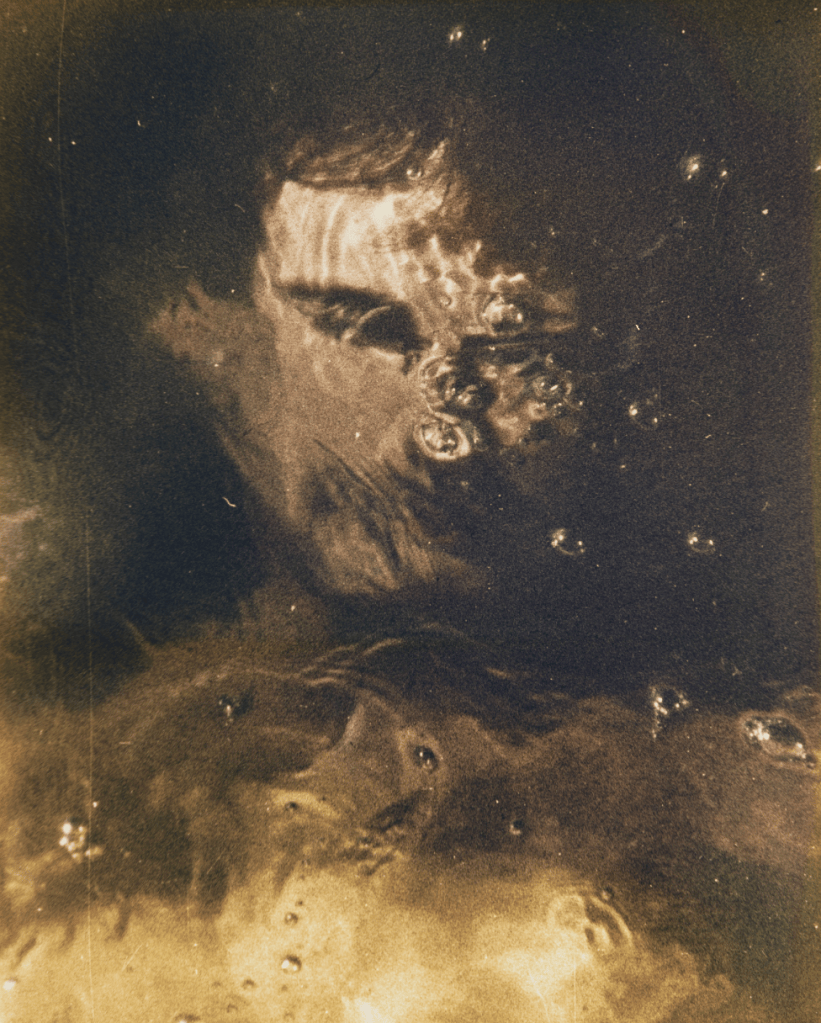
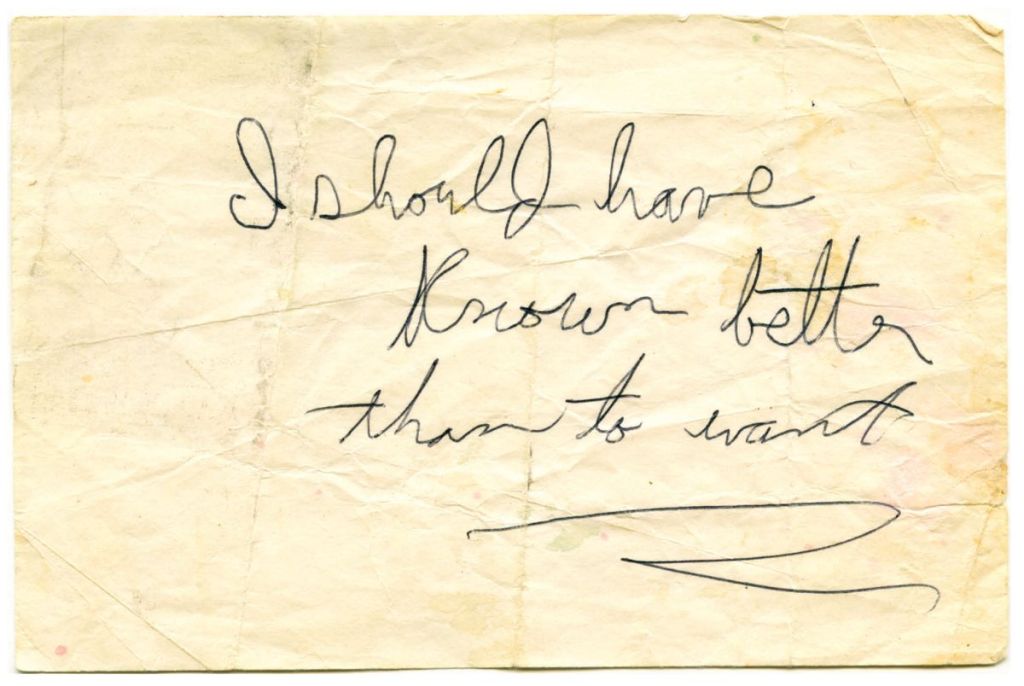
Images, in chronological order: Mark Morrisroe, Ramsey(Lake Oswego), 1986, Collection of MoMA – Museum of Modern Art, New York ; Personal note from Mark Morrisroe (undated), The Estate of Mark Morrisroe/Fotomuseum Winterthur, Winterthur.